
By Susan Kraft-Yorke

Introduction
Wasted time in documentation comes from inefficient searching and "deadwood," which is outdated, irrelevant, or duplicated information. Industry reports have found that employees spend a significant portion of their week searching for information, and the costs associated with this inefficiency are substantial.
When employees spend 20% of their time searching for information, it is equivalent to a business hiring five employees but only four actually work every day; the fifth is off searching for answers, but not contributing to the team's deadlines.
This payroll leak construct remains before and after AI agents and tools as it is a systemic hidden root cause problem.
How documentation deadwood causes wasted time
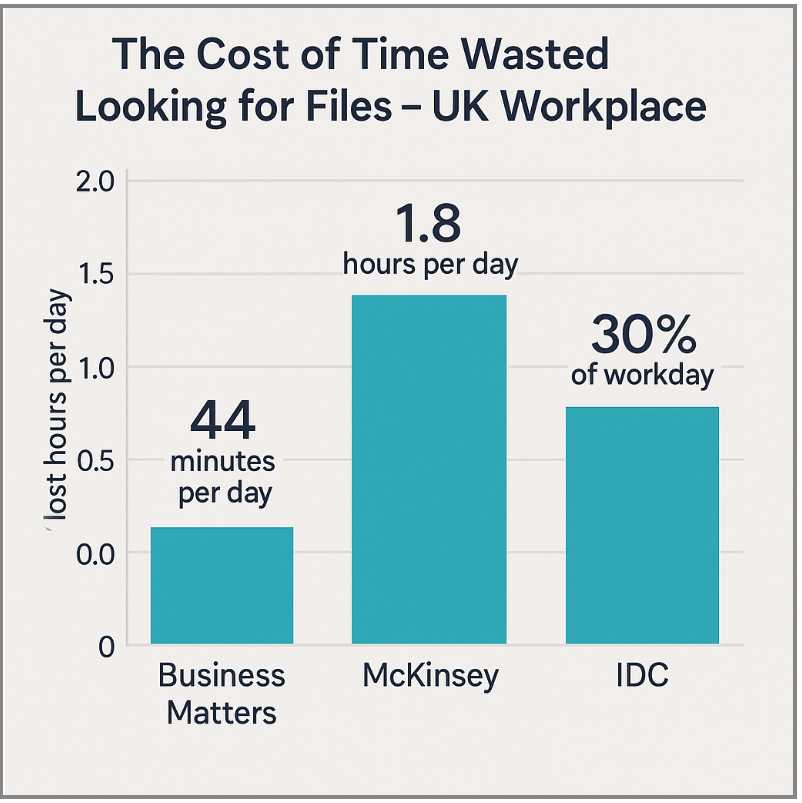
Source: The Hidden Cost of File Hunting: How Much Time UK Employees Really Waste, DocFlow 2025
- Outdated information: When instructions, policies, or product specifications are obsolete, following them leads to errors, rework, and potential safety risks.
- Duplicate and conflicting content: Multiple versions of the same document can cause confusion and slow down decision-making as users try to determine which source is the correct one.
- Poor discoverability: If documentation lacks clear organization, proper tagging, and a centralized location, users are forced to waste time searching or asking colleagues for information that already exists.
- Excessively wordy and non-standardized writing: The use of verbose language, jargon, and inconsistent formatting can make it difficult to quickly find and absorb key information.
Strategies to reduce wasted time
...
(Contact us to continue reading.)
Property of Kraft Consulting ©2025 